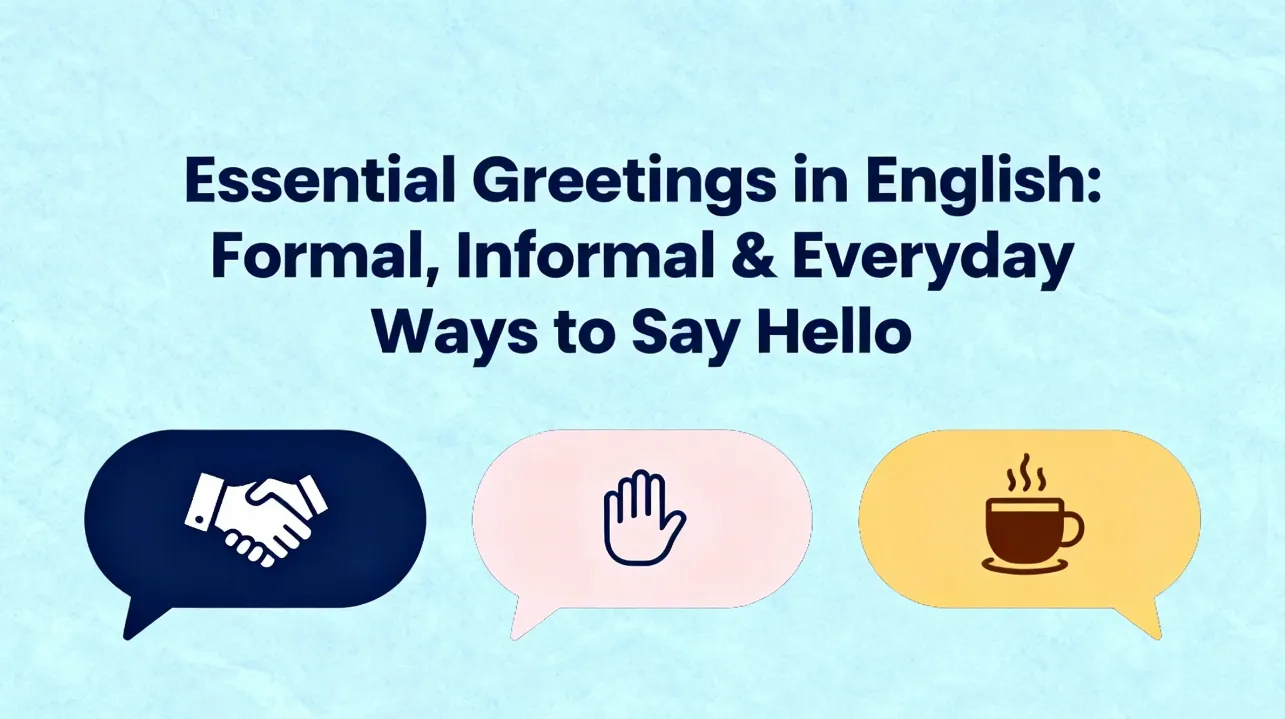
Greetings in English are the foundation of any conversation, serving as a polite way to acknowledge someone and set the tone for interaction.
Whether you’re learning English as a second language, traveling to an English-speaking country, or simply want to expand your vocabulary, understanding various greetings in English can help you communicate more effectively.
From formal salutations in professional settings to casual slang among friends, this guide covers a wide range of options. We’ll explore types, contexts, and tips to make your hellos sound natural and engaging.
Why Greetings Matter in English Communication
In English, greetings aren’t just words—they reflect cultural norms, relationships, and even the time of day. A simple “hello” can open doors in social or business situations, while choosing the wrong one might come across as too stiff or overly familiar.
According to language experts, mastering greetings in English improves fluency and helps build rapport quickly. For instance, in professional environments, a well-chosen greeting shows respect, while informal ones foster friendliness in everyday chats.
Want to greet people correctly worldwide? Read this greetings guide.Formal Greetings in English
Formal greetings in English are used in professional, academic, or unfamiliar settings where respect and politeness are key. They’re often paired with titles like “Mr.,” “Mrs.,” or “Ms.” followed by a last name.
- Good morning / Good afternoon / Good evening: These time-specific phrases are polite starters for any formal interaction. “Say ‘Good morning’ from early morning to noon, ‘Good afternoon’ from noon to around 6 p.m., and ‘Good evening’ afterward.”Example: “Good morning, Mr. Smith. How are you today?”
- Hello: A versatile formal option, especially when followed by a name or title. Example: “Hello, Dr. Johnson.”
- How do you do?: An old-fashioned but still used phrase for first meetings, treated more as a statement than a question. Respond by repeating it or saying “I’m well, thank you.”
- Pleased to meet you / Nice to meet you: Ideal for introductions. Example: “Pleased to meet you, Ms. Lee.”
- How have you been?: For reuniting with someone after a while in a formal context. Example: “How have you been, Professor?”
These greetings help in business meetings, job interviews, or conferences, ensuring a professional tone.
Informal Greetings in English
Informal greetings in English are relaxed and common among friends, family, or acquaintances. They often include slang or shortened forms for a friendly vibe.
- Hi / Hey / Hey there: Quick and casual. “Hi” is universal, while “Hey” suits close friends. Example: “Hey there, how’s it going?”
- Morning / Afternoon / Evening: Shortened versions of formal ones, used casually. Example: “Morning! Coffee?”
- Long time no see / It’s been a while: For old friends. Example: “Long time no see! What’s new?”
- Yo! / Hiya!: Fun and energetic, often in texting or with peers. “Hiya” is popular in British English.
These are great for everyday encounters, like greeting neighbors or chatting with coworkers you know well.
Time-Specific and Contextual Greetings
Many greetings in English tie to the time of day or situation, adding specificity.
- Good morning: Best for early hours, often in professional or casual settings.
- Good afternoon: Midday option, formal or informal.
- Good evening: Evening starter; note that “Good night” is only for farewells, not greetings.
- Phone or email: Start with “Hello” or “Hi,” followed by the person’s name.
- Group settings: “Hello everyone” or “Good morning, team.”
In tricky situations, like meeting someone you dislike, keep it clipped: “Hi.” or a nod.
Slang and Funny Greetings in English
For humor or flair, try these playful greetings in English, especially with friends.
- Howdy!: Cowboy-style, common in the U.S. South.
- Ahoy!: Nautical and silly, like from cartoons.
- What’s crackin’? / What’s up buttercup?: Rhyming fun for lighthearted chats.
- ‘Ello, gov’nor!: Mock British accent for jokes.
- Hello stranger!: For someone you haven’t seen in ages.
Greetings in Different English-Speaking Countries
English greetings vary by region, reflecting local culture.
- American English: “What’s up?,” “Hey dude,” “How are you guys?”
- Australian English: “G’day!,” “How ya goin’?,” “Mate!”
- Irish English: “What’s the craic?,” “How’s the form?”
- New Zealand English: “Kia Ora” (Maori influence), “How are you?”
- Scottish English: “Guid mornin,” “How’s it gaun?”
Using regional greetings shows cultural awareness when traveling.
How to Respond to Greetings in English
Responses keep the conversation flowing. For “How are you?,” say “I’m good, thanks. And you?” For casual “What’s up?,” reply “Not much, you?” In formal settings, mirror the greeting: “Good morning” with “Good morning.” Always match the tone—positive and brief.
Greetings in Written English: Emails and Letters
In writing, greetings set a professional or casual tone.
- Informal: “Hi [First Name],” or no greeting in ongoing texts.
- Job applications: “To the Hiring Manager.”
Personalize when possible for better impact.
Tips for Using Greetings in English Effectively
To optimize your use of greetings in English:
- Consider context: Formal for work, informal for friends.
- Pay attention to tone and body language—a smile enhances any hello.
- Practice variations to sound fluent; apps or tutors can help.
- Avoid overusing slang in mixed settings to prevent misunderstandings.
- For SEO purposes, incorporate related phrases like “English salutations” or “ways to say hi” naturally.
Conclusion
By diversifying your greetings in English, you’ll make stronger connections and navigate conversations with ease. Whether it’s a quick “Hey” or a polished “Pleased to meet you,” the right greeting can turn a simple encounter into a meaningful exchange.