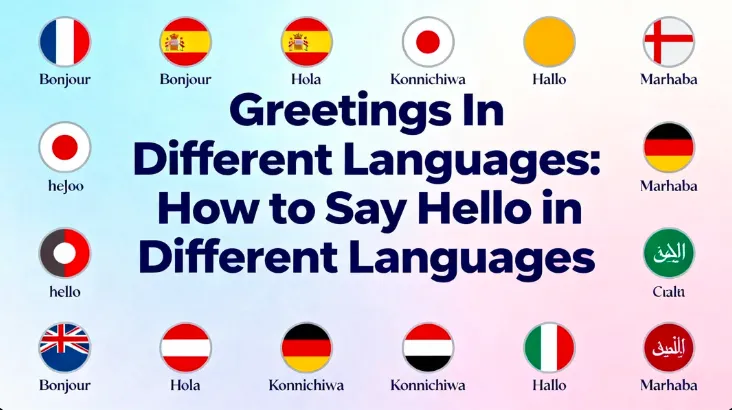
Greetings in different languages are more than just words—they’re gateways to cultural understanding, helping you connect with people globally. Whether you’re traveling, learning a new language, or simply curious about how to say hello in different languages.
This guide provides a comprehensive overview. From “Bonjour” in French to “Namaste” in Hindi, we’ll explore common greetings with pronunciations, formal and informal variations, and regional insights. Optimized for searches like “hello in different languages” and “greetings around the world,” this article includes practical tips to make your interactions authentic and respectful.
Why Greetings Matter Across Cultures
In a globalized world, knowing greetings in different languages fosters empathy and breaks barriers. A simple hello can show respect for someone’s heritage, especially in diverse settings like international business or travel.
Language experts note that greetings often reflect cultural values, such as hierarchy in Asian languages or warmth in Latin American ones. For instance, using the right pronunciation avoids misunderstandings and enhances rapport. Popular queries like “how to say hello in 100 languages” highlight the interest in this topic, so we’ll cover a curated list from major regions.
European Greetings: From Formal to Casual
Europe boasts a rich tapestry of languages, with greetings varying by formality and time of day.
| Language | Formal Greeting | Pronunciation | Informal Greeting | Pronunciation | Notes |
| French | Bonjour | bohn-ZHOOR | Salut | sah-LOO | Use “Bonjour” until evening, then “Bonsoir.” |
| Spanish | Hola | OH-lah | ¿Qué tal? | keh TAHL | Common in Spain and Latin America; add “buenos días” for mornings. |
| German | Guten Tag | GOO-ten tahk | Hallo | HAH-lo | Time-specific: “Guten Morgen” for morning. |
| Italian | Salve | SAL-veh | Ciao | chow | “Ciao” for both hello and goodbye informally. |
| Russian | Здравствуйте (Zdravstvuyte) | ZDRAST-vuy-tyeh | Привет (Privet) | pree-VYET | Formal for strangers, informal for friends. |
| Polish | Dzień dobry | jayn DOH-bri | Cześć | cheshch | “Dzień dobry” means “good day.” |
| Greek | Γεια σας (Yia sas) | yah SAHS | Γεια (Yia) | yah | Plural formal vs. singular informal. |
These European greetings often include gestures like handshakes in Germany or cheek kisses in France.
Asian Greetings: Respect and Tradition
Asian languages emphasize respect, with many greetings involving bows or hand positions.
| Language | Formal Greeting | Pronunciation | Informal Greeting | Pronunciation | Notes |
| Mandarin Chinese | 您好 (Nín hǎo) | neen how | 你好 (Nǐ hǎo) | nee how | Accompany with a nod; common in China and Taiwan. |
| Japanese | こんにちは (Konnichiwa) | koh-nee-chee-wah | やあ (Yā) | yah | Bow when saying; “Ohayō gozaimasu” for morning. |
| Korean | 안녕하세요 (Annyeonghaseyo) | ahn-nyung-hah-seh-yo | 안녕 (Annyeong) | ahn-nyung | Formal includes honorifics; bow slightly. |
| Hindi | नमस्ते (Namaste) | nuhm-uh-stay | हाय (Hi) | hi | Press palms together; used in India and Nepal. |
| Arabic | السلام عليكم (As-salaam alaikum) | ass-sah-LAHM ah-LAY-koom | مرحبا (Marhaba) | mar-HAH-bah | Response: “Wa alaikum as-salaam”; common in Middle East. |
| Turkish | Merhaba | MEHR-hah-bah | Selam | seh-LAHM | Versatile; “Günaydın” for good morning. |
| Vietnamese | Xin chào | seen chow | Chào | chow | Add “bạn” for “friend” informally. |
In Asia, context matters—use formal versions with elders or superiors.
African Greetings: Diversity and Warmth
Africa’s linguistic diversity shines in its greetings, often incorporating local customs.
| Language | Greeting | Pronunciation | Notes |
| Swahili | Jambo | JAHM-bo | Common in East Africa; means “hello.” |
| Afrikaans | Hallo | HAH-lo | Spoken in South Africa; similar to Dutch. |
| Amharic | ሰላም (Selam) | seh-LAHM | Used in Ethiopia; often with a handshake. |
| Zulu | Sawubona | sah-woo-BOH-nah | Means “I see you”; respectful in South Africa. |
| Yoruba | Bawo ni | BAH-wo nee | “How are you?” in Nigeria; informal hello. |
African greetings may involve extended inquiries about well-being.
Greetings in the Americas and Oceania
Beyond English “Hello,” the Americas and Oceania offer unique phrases.
| Language | Greeting | Pronunciation | Notes |
| Portuguese (Brazil) | Olá | oh-LAH | Formal; “Oi” informally. |
| Quechua | Allillanchu | ah-lee-YAHN-choo | Spoken in Andes; means “How are you?” |
| Hawaiian | Aloha | ah-LOH-hah | Also goodbye; with lei gestures. |
| Maori | Kia ora | kee-ah OH-rah | New Zealand; means “be well.” |
Time-Specific and Cultural Greetings
Many languages have time-based greetings: “Good morning” equivalents like “Buenos días” in Spanish or “Ohayō” in Japanese. Cultural ones include “Shalom” in Hebrew (peace) or “Sawasdee” in Thai with a wai gesture.
How to Respond to Greetings Worldwide
Responses often mirror the greeting: In Arabic, reply “Wa alaikum as-salaam.” Keep it positive and brief, like “Fine, thanks” in English equivalents.
Greetings in Written Form: Global Emails and Texts
Start formal emails with “Dear [Name],” but adapt: “Cher” in French or “Estimado” in Spanish. Informally, use “Hi” across many languages.
Tips for Using Greetings in Different Languages Effectively
- Learn pronunciations via apps for accuracy.
- Observe gestures: Bow in Japan, handshake in Europe.
- Start formal, switch based on response.
- Respect cultural norms to avoid faux pas.
Conclusion
Mastering greetings in different languages enriches travel and conversations. Start with “Hello” in your target language today for global connections!