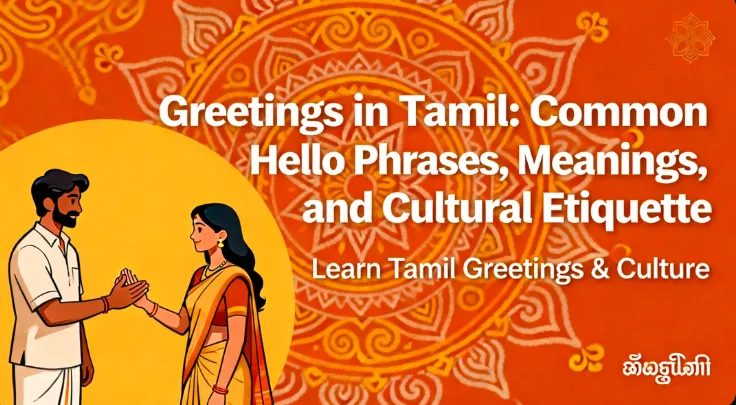
Greetings in Tamil, in the vibrant world of the Tamil language, spoken by millions in Tamil Nadu, Sri Lanka, and diaspora communities worldwide, greetings play a crucial role in daily interactions. Whether you’re learning how to say hello in Tamil for travel, business, or connecting with Tamil-speaking friends, mastering these basic Tamil greetings can open doors to meaningful conversations.
This guide explores common Tamil greetings, complete with scripts, transliterations, pronunciations, and tips for proper usage. By incorporating these phrases, you’ll not only communicate effectively but also show respect for Tamil culture.
Why Learn Greetings in Tamil?
Tamil, one of the oldest classical languages, emphasizes politeness and context in communication. Greetings in Tamil often reflect hierarchy, time of day, and formality levels. For instance, the traditional “Vanakkam” is accompanied by a gesture of folding hands (similar to Namaste), symbolizing respect and humility. Understanding these nuances can enhance your cultural immersion and help you navigate social situations with ease.
This gesture, known as Vanakkam, involves pressing your palms together at chest level while slightly bowing your head.
Basic Everyday Greetings in Tamil
Start with these fundamental phrases for hello in Tamil. They’re versatile and can be used in both formal and informal settings.
| Tamil Script | Transliteration | Pronunciation | English Meaning |
| வணக்கம் | Vanakkam | Vaa-nak-kam | Hello (formal/informal) |
- Usage Tip: “Vanakkam” is the go-to greeting in Tamil, suitable for strangers, elders, or professional environments. It’s often the first word you’ll hear in Tamil movies or at cultural events.
For a more casual vibe among friends:
- ஹாய் (Haay) – Hi (informal, borrowed from English but commonly used).
Time-Specific Greetings in Tamil
Tamil greetings often incorporate the time of day, adding a layer of specificity and warmth to your interactions.
| Tamil Script | Transliteration | Pronunciation | English Meaning |
| காலை வணக்கம் | Kaalai Vanakkam | Kaa-lai Vaa-nak-kam | Good morning |
| மதிய வணக்கம் | Madhiya Vanakkam | Ma-dhi-ya Vaa-nak-kam | Good afternoon |
| மாலை வணக்கம் | Maalai Vanakkam | Maa-lai Vaa-nak-kam | Good evening |
| இரவு வணக்கம் | Iravu Vanakkam | I-ra-vu Vaa-nak-kam | Good night |
- Cultural Note: Use “Kaalai Vanakkam” before noon, switching to “Madhiya Vanakkam” in the afternoon. These phrases are polite ways to acknowledge the time while greeting someone.
Asking “How Are You?” in Tamil
After a greeting, it’s common to inquire about someone’s well-being. Here’s how to say “How are you?” in Tamil:
| Tamil Script | Transliteration | Pronunciation | English Meaning |
| எப்படி இருக்கிறீர்கள்? | Eppadi Irukkiṟīrkaḷ? | Ep-pa-di I-ru-ki-ree-gal? | How are you? (formal) |
| எப்படி இருக்கீங்க? | Eppadi Irukeenga? | Ep-pa-di I-ru-keen-ga? | How are you? (informal) |
- Response Example: A common reply is “நான் நன்றாக இருக்கிறேன்” (Naan Nandraaga Irukkiṟēn) meaning “I am fine.”
Farewell Phrases in Tamil
Ending conversations gracefully is just as important. Here are some ways to say goodbye in Tamil:
| Tamil Script | Transliteration | Pronunciation | English Meaning |
| போய்ட்டு வரேன் | Poyittu Varen | Poy-it-tu Va-ren | Bye (I’ll go and come back) |
| பார்க்கலாம் | Paarkkalaam | Paar-ka-laam | See you |
| நன்றி | Nandri | Nan-dri | Thank you |
- Fun Fact: “Poyittu Varen” literally means “I’ll go and come,” reflecting the cultural hope of reuniting soon.
Master everyday greetings from around the world with this guide.Cultural Etiquette for Using Tamil Greetings
When using greetings in Tamil, remember:
- Formality Matters: Always use formal versions with elders or in professional settings to show respect.
- Gesture Integration: Pair verbal greetings with the Vanakkam hand fold for authenticity.
This traditional pose is a non-verbal way to convey warmth and politeness.
- Regional Variations: In Sri Lankan Tamil, slight differences in pronunciation may occur, but core phrases remain similar.
- Festival Greetings: During Tamil New Year (Puthandu), say “இனிய புத்தாண்டு வாழ்த்துக்கள்” (Iniya Puthaandu Vaazhthukkal) for “Happy New Year.”
Conclusion
By practicing these greetings in Tamil, you’ll not only improve your language skills but also build stronger connections. Whether it’s a simple “Vanakkam” or a full conversation starter, these phrases are your gateway to Tamil hospitality. Start using them today and experience the richness of this ancient language!